S-3 2nd floor Malik plaza plot No -5 sector 4 Dwarka New Delhi 110078
Find Property by City Location
1City
2Category
3Type
4Developer
Select City Location
Choose Category
Property Type
Choose Developer
Blogs

Commercial Property in Gurgaon for NRIs
Social Media Share
Commercial Property in Gurgaon for NRIs
What You Should Know Before You Invest:
For an NRI looking at Indian real estate, Gurgaon—or Gurugram—can appear straightforward at first: a major corporate city, strong road connectivity, multinational companies, premium residential communities and a large commercial market. But buying a commercial property from outside India is a very different exercise from simply choosing a shop or office from a project brochure.
The real question is not only where property prices may move. It is whether the particular commercial asset has a sensible business ecosystem around it: genuine tenant demand, accessibility, visibility, quality of construction, professional management, appropriate approvals, a workable lease structure and a realistic exit market.
Why Gurgaon Continues to Matter for Commercial Real Estate
Gurgaon's commercial market is supported by something more durable than a property trend: a large employment and corporate ecosystem. The city has developed into one of the key office markets of Delhi-NCR, with major occupiers, global capability centres, technology companies, consulting firms, financial services companies and professional businesses operating across multiple micro-markets.
For an NRI, this matters because commercial real estate ultimately depends on economic activity. Offices need employees, retailers need consumers, food and beverage spaces need footfall, and business districts need connectivity. A city's commercial strength therefore provides context—but it does not make every property a good investment.
The more useful approach is to move from the city level to the micro-market level, and then from the micro-market to the individual project.
Can an NRI Buy Commercial Property in Gurgaon?
Generally, yes. The Reserve Bank of India's guidance states that an NRI or OCI can acquire immovable property in India other than agricultural land, farmhouse and plantation property, subject to the applicable FEMA framework. The RBI also specifies permitted payment channels, including funds received in India through banking channels and eligible NRE, FCNR(B) or NRO accounts.
The important word is 'applicable'. An NRI should not treat a general internet explanation as transaction-specific legal or tax advice. The buyer's residency status, the source of funds, the type of property, the method of purchase and the eventual sale or repatriation plan can all affect the compliance process.
Before transferring a large amount of money, it is sensible to coordinate with an authorised dealer bank and a qualified tax or legal professional. This is particularly important if the investment is being made with the intention of eventually sending sale proceeds or rental income outside India.
What Makes Commercial Property Different for an NRI?
· An office depends on employee access, corporate demand, building quality and tenant suitability.
· A retail shop depends heavily on visibility, frontage, access, catchment and actual footfall.
· A food and beverage space depends on customer movement, tenant mix, operating costs and management.
· An SCO property requires careful review of land rights, permitted use, construction provisions and development controls.
· A pre-leased property requires analysis of the actual tenant and lease—not just the headline rental return.
· An NRI also has a management-distance problem: the property should be evaluated with remote ownership, monitoring and eventual exit in mind.
Commercial Property Options NRIs Can Explore in Gurgaon
1. Office Spaces
Gurgaon's office market provides exposure to the city's corporate economy. Established districts such as Cyber City and Udyog Vihar sit alongside newer office clusters in areas including Golf Course Extension Road and other developing corridors.
For an NRI, the key questions are practical: Who occupies the building? What is the building's occupancy history? How accessible is it for employees? What are the maintenance and common-area charges? What competing office supply exists nearby? What is the realistic rent for comparable space?
A professionally managed Grade A building with established tenants can be a very different proposition from a newly launched office project whose demand is still developing.
2. Retail and High-Street Shops
· Study the residential population around the project.
· Check whether the project has usable frontage and visibility.
· Look at actual access for customers, not only the location on a map.
· Review parking and drop-off arrangements.
· Understand the tenant mix and the role of anchor brands.
· Compare asking rents with rents actually achieved in comparable properties.
3. Food Courts and F&B Spaces
Food and beverage investments are particularly dependent on footfall and management. An NRI should examine the operator, tenant profile, common-area charges, lease structure, fit-out requirements and the reason customers are expected to visit the destination.
The strongest question is not 'What return is advertised?' but 'What creates repeat customer traffic here?'
5. Pre-Leased Commercial Property
· Who is the tenant?
· How long is the lease valid?
· What is the lock-in period?
· How often does rent escalate?
· What is the security deposit?
· Who pays maintenance and common-area charges?
· What happens if the tenant exits early?
· How much lease term remains when you purchase?
Where Should an NRI Look for Commercial Property in Gurgaon?
There is no single 'best' Gurgaon location for every NRI. A better approach is to match the micro-market with the commercial asset and investment objective.
Dwarka Expressway: Connectivity Plus a Developing Commercial Ecosystem
Dwarka Expressway has moved beyond being only a future-infrastructure story. NHAI records that the 19-km Haryana section was inaugurated in March 2024 and provides direct connectivity toward the IGI Airport and Gurugram Bypass.
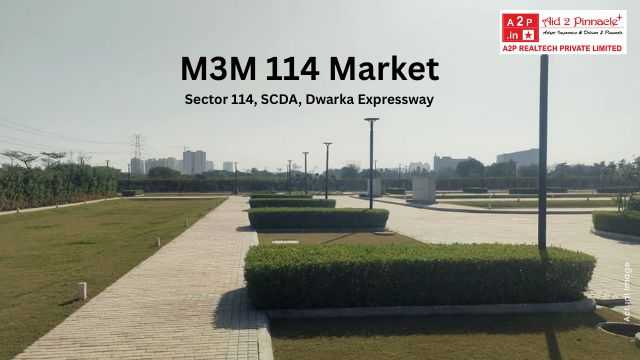
The corridor now has a growing residential base alongside commercial developments. A2P Realtech's own current commercial portfolio includes multiple opportunities around Dwarka Expressway, including Sector 102, Sector 106, Sector 113 and nearby sectors.
For an NRI, the opportunity is worth studying—but the correct question is which project has the strongest present-day catchment, access and commercial ecosystem rather than assuming that every property along the expressway will perform in the same way.
Golf Course Road and Golf Course Extension Road
These corridors connect premium residential catchments with established and emerging business activity. They can be relevant for office, retail and mixed-use commercial investments, particularly where affluent residential communities and employment centres overlap.
The challenge is entry pricing. A premium address can command a premium acquisition cost, so the investment needs to be tested against actual rental economics and long-term demand.
NH-48 and New Gurgaon
NH-48 is one of Gurgaon's major arterial corridors, and New Gurgaon has developed into a large residential and commercial expansion zone. A2P Realtech's current commercial portfolio includes projects in sectors such as 82, 83, 84 and 89, reflecting the company's active coverage of this side of the market.
For commercial property, the presence of a residential catchment is particularly important because future retail demand often depends on the number, profile and maturity of surrounding households.
Sohna Road and Southern Peripheral Road
These corridors connect several residential, employment and emerging commercial clusters. Their long-term relevance is linked to urban expansion and connectivity, but investors should examine the exact access road, surrounding development and competing supply rather than evaluating the entire corridor as one market.
Why Infrastructure Matters—but Should Not Be the Only Reason to Buy
Infrastructure can improve accessibility, reduce travel time and expand the effective catchment of a commercial property. Gurgaon benefits from expressways, arterial roads, airport connectivity and a broader NCR transportation network.
The professional approach is to ask what the infrastructure changes for the specific property:
· How many minutes does it save?
· Which customers or employees does it bring closer?
· Does it improve visibility or only connectivity?
· Does it support current demand or a future demand thesis?
The NRI Due-Diligence Checklist
For an NRI, due diligence should be more structured because physical distance makes it harder to investigate problems personally.
1. Verify the project and promoter information through the applicable RERA system where registration is required.
2. Review title, ownership/development rights, sanctioned plans, approvals and other project-specific documents with a qualified legal professional.
3. Confirm the exact permitted commercial use of the unit or plot.
4. Verify the unit's area, floor, frontage, access, parking rights and common-area obligations.
5. For a pre-leased property, inspect the actual lease and supporting rent-payment records where available.
6. Calculate the all-in acquisition cost, including applicable duties, taxes, registration and other transaction expenses.
7. Model vacancy and recurring costs instead of assuming continuous occupancy.
8. Confirm the funding and remittance route with an authorised dealer bank before transferring funds.
9. Discuss tax treatment with a qualified CA/tax adviser, particularly for rental income, sale and cross-border remittances.
Tax and Repatriation: What NRIs Should Not Ignore
The tax side of an NRI property transaction can involve rental income, capital gains, withholding and reporting obligations. The Income Tax Department's current non-resident guidance also reflects the continuing distinction between tax residency and FEMA-related residency concepts.
For payments to non-residents, the Income Tax Department's Form 15CA guidance explains the reporting framework under Section 195 and notes circumstances in which Form 15CB may be relevant.
The practical lesson is simple: do not calculate the final return using purchase price and advertised rent alone. Consider taxes, vacancy, maintenance, financing costs, transaction expenses and the eventual sale structure.
How A2P Realtech Fits Into the NRI Buying Journey
A2P Realtech's website shows a broader advisory model than a simple property-listing approach. The company describes itself as an authorised sales channel partner and highlights transparent pricing and project information, personalised recommendations, project access, site visits, booking and transaction coordination, loan assistance and post-sales support.
That matters for an NRI because the first step should be comparison. If the objective is rental income, the shortlist may look different from an investor seeking long-term ownership flexibility. If the buyer wants a pre-leased asset, tenant quality becomes central. If the buyer wants a new commercial project, the focus shifts toward development, catchment formation, approvals and future leasing.
A2P Realtech's published service approach is therefore most useful when it is used as a structured process: understand the requirement, shortlist relevant options, compare them, inspect the property, coordinate the transaction and keep documentation organised. Legal and tax opinions should still come from the relevant independent professionals.
A2P Realtech's Commercial Property Approach
|
Buyer Need |
What to Evaluate |
How A2P Can Assist |
|
Rental-focused investment |
Tenant demand, lease, rent, vacancy, costs |
Shortlisting and project comparison |
|
Retail investment |
Catchment, visibility, footfall, tenant mix |
Location/project evaluation |
|
Office investment |
Corporate demand, building quality, occupancy |
Commercial project comparison |
|
NRI remote purchase |
Documentation, site inspection, banking process |
On-ground and transaction coordination |
|
Long-term portfolio |
Location, asset quality, liquidity, holding period |
Investment-oriented discussion |
What NRIs Should Avoid
· Buying solely because a project brochure promises a high rental return.
· Assuming that a famous developer automatically makes every unit suitable for every investor.
· Treating an entire corridor as one market without studying the exact sector and project.
· Ignoring vacancy, maintenance, CAM and fit-out costs.
· Transferring funds before confirming the correct banking/FEMA route.
· Relying on a verbal assurance instead of checking the agreement and project documents.
· Buying a retail property without studying actual catchment and footfall.
· Ignoring the remaining lease period of a pre-leased asset.
· Assuming future infrastructure automatically guarantees appreciation.
· Planning the purchase without an exit strategy.
A Simple Framework for Comparing Two Commercial Properties
· Total purchase cost
· Current or achievable rent
· Lease quality and remaining term
· Vacancy assumption
· Maintenance and operating costs
· Location and accessibility
· Tenant/catchment strength
· Project and developer documentation
· Resale liquidity
· Five-to-ten-year holding objective
Frequently Asked Questions
Can NRIs buy commercial property in Gurgaon?
Generally yes. NRIs/OCIs can acquire immovable property in India other than agricultural land, farmhouse and plantation property under the applicable FEMA framework. The specific transaction should be checked against current RBI rules and the buyer's circumstances.
Can an NRI buy an office or retail shop in Gurgaon?
Commercial property can generally be acquired by eligible NRIs/OCIs, subject to applicable rules. The project approvals, permitted use and payment route should be verified before purchase.
Is pre-leased property suitable for an NRI?
It can be, particularly for buyers seeking an existing rental stream, but suitability depends on the tenant, lease terms, remaining tenure, rent, escalation, costs and exit liquidity.
Which Gurgaon locations should NRIs study?
Depending on the asset and objective, buyers can study established and emerging areas such as Cyber City/Udyog Vihar, Golf Course Road, Golf Course Extension Road, NH-48/New Gurgaon, Dwarka Expressway, SPR and Sohna Road. The individual project and micro-location matter more than the corridor name alone.
What documents should an NRI verify?
The exact list varies, but may include title/development documents, approvals, RERA details where applicable, agreement documents, payment records, lease documents for pre-leased assets and property-specific permissions. Independent legal review is recommended.
Can A2P Realtech help an NRI who cannot visit Gurgaon?
A2P Realtech's website describes site-visit coordination, project selection, transaction assistance and post-sales support. The exact service available should be confirmed for the individual transaction.
Should NRIs take tax advice before buying?
Yes. Rental income, capital gains, withholding and repatriation can have tax implications. A qualified CA/tax adviser should review the buyer's specific situation.
Why Work With a Gurgaon-Focused Consultant?
Commercial property decisions become more complicated when a buyer is comparing multiple developers, locations and asset types from another country. A Gurgaon-focused consultant can reduce the initial information gap by bringing local project knowledge, on-ground coordination and market comparisons into one process.
A2P Realtech's published portfolio reflects a focus on Gurgaon and the wider NCR market, including residential and commercial opportunities. Its commercial listings currently span multiple locations and formats, which can be useful for an NRI who wants to compare alternatives instead of committing to the first project presented.
The right consultant should not replace due diligence. The role is to make the research process more organised, transparent and practical.
Buy the Asset, Not Just the Story
Gurgaon has the scale, corporate ecosystem and infrastructure that make it an important commercial real estate market in India. Its office stock has crossed the 100-million-sq.-ft. mark, and major connectivity projects such as Dwarka Expressway have strengthened the city's links with Delhi and the airport.
For NRIs, however, the strongest commercial property decision is rarely the one with the loudest marketing. It is the one where the location, asset type, tenant or customer ecosystem, documentation, cash-flow assumptions and exit plan make sense together.
That is the lens through which A2P Realtech can add value: not simply by presenting commercial properties, but by helping an NRI structure the search around the investment objective, compare suitable opportunities and coordinate the on-ground process in Gurgaon.
About A2P Realtech
A2P Realtech Private Limited is a real estate consultancy serving buyers and investors across Gurgaon and the wider NCR market. Its website presents a portfolio spanning luxury residential developments and commercial opportunities, including office spaces, retail, food courts, SCO plots and mixed-use business spaces. The company also highlights its role as an authorised sales channel partner and offers property selection, project comparison, site-visit coordination, transaction assistance and post-sales support.
For NRI buyers, the objective is to make the Gurgaon property search more structured—from understanding the requirement to identifying suitable options and coordinating the purchase journey.