S-3 2nd floor Malik plaza plot No -5 sector 4 Dwarka New Delhi 110078
Find Property by City Location
1City
2Category
3Type
4Developer
Select City Location
Choose Category
Property Type
Choose Developer
Blogs
Residential Plots in Mumbai Khopoli
Social Media Share
Residential Plots in Mumbai Khopoli: Discover Shapoorji Pallonji Projects
Introduction: A New Vision of Nature-Inspired Living Near Mumbai
Finding the right residential plot is about more than purchasing land. For many homebuyers, it is an opportunity to create a home that reflects their lifestyle, gives them more personal space and brings them closer to nature. For second-home seekers, it can mean finding a peaceful retreat away from the noise of a busy city. For families planning their future home, it can mean having the freedom to choose their own layout, architecture and outdoor space.
Khopoli, in Maharashtra, is an area worth exploring for buyers interested in residential plots near Mumbai. Its regional setting, access to major road corridors and proximity to the Sahyadri landscape make it an option for people comparing plotted developments outside the more densely built-up parts of the Mumbai Metropolitan Region.
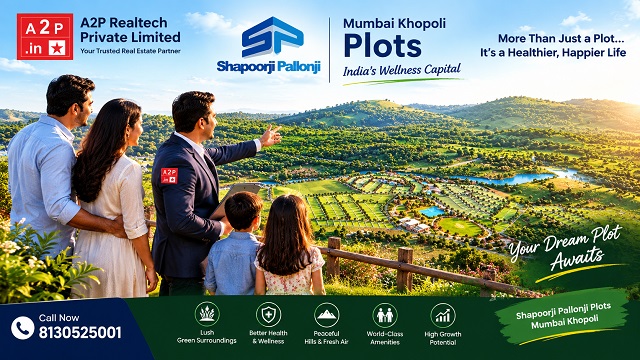
Among the project concepts attracting interest in this segment is Shapoorji Pallonji Mumbai Khopoli Projects, presented in the supplied project brief as a large nature-and-wellness destination called “India’s Wellness Capital.” The concept focuses on expansive green spaces, private forest areas, water features, recreational facilities and a selection of proposed residential formats, including bungalows, hamlets and private plots.
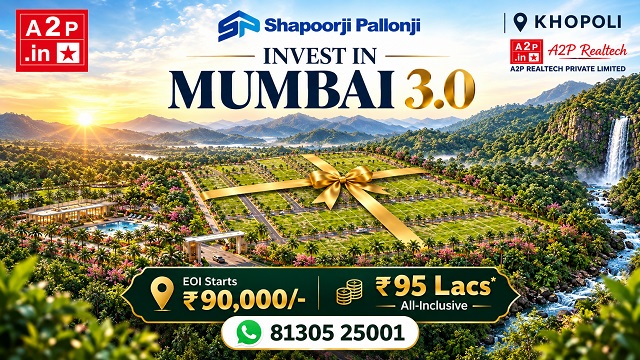
According to the supplied brief, the larger development is planned across more than 900 acres at an elevation of over 400 metres above sea level. The first chapter is described as covering more than 200 acres, with plots starting at 2,000 square feet and a stated price of ₹95 lakh on an all-inclusive basis.
These details offer a starting point for exploring the concept. Buyers should confirm the project’s official name, developer association, exact location, current prices, approvals, availability and the meaning of “all-inclusive” directly from the authorised sales team and relevant documentation before making a decision.
This guide explains the proposed project concept, the appeal of residential plots in Mumbai Khopoli, the lifestyle features described in the brief, important buying considerations and questions to ask before expressing interest.
What Is Shapoorji Pallonji Mumbai Khopoli Projects?
Shapoorji Pallonji Mumbai Khopoli Projects is the target search phrase for buyers researching a plotted residential and nature-oriented development in the Khopoli region. The supplied project brief presents the development as a large-scale destination built around the relationship between private space, greenery, water, wellness and elevated living.
Instead of focusing exclusively on apartment-style housing, the stated concept includes several proposed residential formats. These include private plots, bungalows and hamlets, giving prospective buyers different possibilities to explore depending on their lifestyle preferences and the development’s final approved offering.
The project's central positioning is “India’s Wellness Capital.” In practical terms, this suggests a vision where the natural setting and planned lifestyle amenities are important parts of the residential experience rather than secondary additions.
The concept described in the brief includes:
-
A proposed overall development spanning more than 900 acres.
-
An elevation stated to be more than 400 metres above sea level.
-
More than 380 acres described as private forest within the development.
-
A natural waterfall and dam, as stated in the brief.
-
Surrounding government forest areas stated to cover more than 2,000 acres.
-
Expansive open spaces and planned low-density living.
-
A first development chapter of more than 200 acres.
-
Proposed community, sports and wellness facilities.
-
Private plots starting at 2,000 square feet.
These are significant claims about the project’s scale and proposed character. Prospective buyers should request the master plan, land-use details and current approval documents to understand precisely which areas are residential, which are recreational or landscaped, and which are forest or other protected or restricted land.
A well-planned plotted development should be assessed not only by the size of its total land parcel, but also by the quality of its internal infrastructure, plot demarcation, legal documentation, access roads, utilities and long-term management arrangements.
Why Consider Residential Plots in Mumbai Khopoli?
The search for residential plots near Mumbai has several motivations. Some buyers want to build an independent home rather than purchase a ready apartment. Others want a second home where they can spend weekends and holidays. Some are exploring land as a long-term asset, while others want flexibility over when and how they construct a property.
Khopoli may enter these searches because it offers a different setting from a high-density urban neighbourhood. However, the suitability of any specific location depends on actual travel times, road conditions, public transport, nearby services and the location of the plot within the development.
1. More freedom to design a home
A residential plot can give a buyer greater flexibility in planning a home. Depending on the approved building rules, plot dimensions and development guidelines, owners may be able to plan room layouts, outdoor spaces, terraces, gardens and other features around their needs.
For families, this can mean planning spaces for different generations. For buyers who work remotely, it could mean including a dedicated study. For people who enjoy gardening or outdoor entertaining, a plot may provide possibilities that are difficult to achieve in a compact apartment.
The actual freedom to build depends on the title documents, development regulations, permitted land use, setbacks, floor-area limits and the project’s building guidelines. Buyers should check these restrictions before choosing a plot size.
2. A nature-oriented setting
The supplied brief places considerable emphasis on greenery, forest areas, open spaces and water features. For buyers who value a natural setting, these elements may be an important part of the project's appeal.
A green environment can make outdoor activities more inviting and offer a different atmosphere from densely built-up neighbourhoods. Nevertheless, the presence of forest land around or within a large project does not automatically mean every plot has a forest view or direct access to natural features.
Ask for the approved master plan, plot location, environmental information and clear details of which natural features are accessible to residents. Confirm whether any waterfall, dam, trail or landscaped area is existing, proposed, seasonal or subject to access restrictions.
3. Potential for a second home
Some people looking for plots near Mumbai want a place to escape their regular routine without relocating permanently. A second home may be used for weekends, holidays, family gatherings or longer stays.
A plot can offer the possibility of building a home tailored to these uses. Before buying, however, consider the practicalities: travel time from your main residence, water availability, electricity, security, maintenance, emergency services and the cost of keeping the property in good condition when it is unoccupied.
The right location is one that works for your real schedule and budget, not just one that looks attractive in a brochure.
4. Space for future lifestyle needs
An independent plot can be appealing to buyers who expect their needs to change over time. A family may want extra rooms, a garden, a hobby space or accessible ground-floor accommodation in the future.
The benefit depends on the plot's dimensions and permitted construction. A smaller plot may be suitable for a compact home, while a larger plot may provide more design options. Buyers should compare usable dimensions and building rules rather than looking only at the total square footage.
5. A different approach to community living
Large plotted developments often combine private homes with shared amenities. The project brief describes a community centre, sports complex and proposed wellness resort as part of the first chapter.
If delivered as planned, shared facilities could provide places for recreation, social interaction and wellness-related activities. Their actual value will depend on the final design, quality of construction, opening dates, operating hours, access rules and ongoing maintenance arrangements.
Ask which amenities are included in the purchase price, which require separate payment, and which are only proposed for a later phase.
Understanding the “India’s Wellness Capital” Concept
Wellness-focused residential planning aims to make wellbeing part of everyday life. Depending on the project, this may involve open spaces, walking routes, sports facilities, relaxation areas, community activities and access to nature.
The supplied brief describes the Khopoli project as a destination where private forests, water, wellness and elevated living come together. This positioning may appeal to buyers who want a home environment that encourages outdoor time and recreational activities.
Green spaces and private forest areas
The brief states that more than 380 acres of private forest are planned or associated with the development. This is one of the concept's most prominent claims and deserves careful examination.
Buyers should ask how the forest area is defined on the master plan, whether it is legally part of the development, who will maintain it and what access residents will have. They should also establish whether the area is subject to environmental restrictions or other land-use conditions.
The distinction between private forest, landscaped open space, protected forest and government forest matters. These terms can refer to different legal and management arrangements. Do not assume that all green areas can be developed, entered or used freely.
Water features and natural surroundings
A natural waterfall and dam are highlighted in the supplied brief. Water features can contribute to the character of a destination, but they should be assessed realistically.
Ask whether the waterfall and dam are existing natural features, planned works or nearby attractions. Clarify the distance from individual plots, whether public or resident access is permitted, how seasonal changes affect water levels and what safety measures are in place.
It is also important to understand the site's drainage and water-management systems. In areas with seasonal heavy rainfall, stormwater planning, slope stability, access roads and erosion management can be significant factors in property evaluation.
Elevated living and outdoor activities
The brief states that the wider site sits more than 400 metres above sea level. Elevation alone does not guarantee a particular climate, view or temperature, but it can be one aspect of a location's character.
Prospective buyers should visit the area at different times if possible. Observe the road approach, rainfall conditions, terrain, sunlight, mobile connectivity and the actual surroundings of the plot being offered.
A visit helps distinguish between a broad project vision and the specific experience a buyer can expect at a particular location.
The First Chapter: More Than 200 Acres
The project brief identifies the first chapter as a development of more than 200 acres. It is described as the initial cluster in a wider proposed destination and includes a mix of private residential spaces and lifestyle facilities.
A phased development can make it easier for buyers to understand which areas are planned for earlier delivery and which belong to the longer-term vision. At the same time, phases can differ in infrastructure readiness, possession schedules and amenity access.
Before making a booking decision, request a phase-specific plan that identifies the exact plot, internal roads, utilities, community facilities and construction schedule. Confirm whether the amenities promoted for the overall development will be available when the first plots are handed over.
Proposed 10+ acre community centre
The brief describes a community centre spanning more than 10 acres. A community centre may serve as a focal point for social activities, resident gatherings and shared programmes.
Its usefulness will depend on the final facilities, design, access arrangements and management. Ask for the approved amenity plan and a list of facilities proposed for the community centre. Confirm whether the area includes buildings, landscaped grounds, recreational facilities or a combination of these.
Proposed 10+ acre sports complex
A sports complex of more than 10 acres is also mentioned in the supplied brief. Sports and recreation areas can be useful for families and residents who enjoy active lifestyles.
However, a headline acreage figure does not tell buyers which sports will be available. Ask whether the final plan includes outdoor courts, indoor facilities, swimming facilities, fitness areas or other amenities. Check whether their delivery is part of the current phase and whether access is included in the purchase or maintenance charges.
Proposed 20+ acre branded wellness resort
The project brief describes a proposed branded wellness resort covering more than 20 acres. A resort can add a hospitality component to a destination, but a proposal should not be treated as a completed facility or confirmed operating partnership.
Buyers should request details of the resort operator, brand agreement, development status, expected opening schedule and access policy. If the resort is still proposed, ask what happens if the project timeline or operating arrangement changes.
Do not assume that purchasing a residential plot automatically includes resort memberships, hotel services, discounts or rental income. These benefits must be confirmed in written agreements.
Proposed bungalows, hamlets and private plots
The first chapter is described as including bungalows, hamlets and private plots. These formats may appeal to different types of buyers.
A private plot can suit someone who wants to plan and build a home according to approved rules. A bungalow may appeal to a buyer who prefers a more complete residential product, while a hamlet-style concept may suggest a cluster of homes with a shared setting.
The actual product types, specifications and availability must be confirmed from the current inventory and approved project documents. Buyers should compare total costs, construction obligations, ownership structure and possession terms before deciding which format fits their needs.
Plot Sizes Starting at 2,000 Square Feet
The supplied brief states that plots start at 2,000 square feet. This provides a useful starting point for comparing plot options, but the area alone does not determine whether a plot is suitable.
Two plots with the same stated area can have different proportions, road frontage, orientation, terrain and usable building space. A buyer should examine the exact dimensions and plot position on the sanctioned layout.
What can a 2,000-square-foot plot offer?
A 2,000-square-foot plot may be suitable for a compact independent home, depending on local regulations and the project's building guidelines. The permitted built-up area may be smaller than the plot area because of setbacks, access requirements, open-space provisions and other development controls.
Before deciding, ask for:
-
Exact plot dimensions and boundaries.
-
A clearly identified plot number on the layout.
-
Permitted land use and construction rules.
-
Applicable setbacks and permissible built-up area.
-
Road width and access arrangements.
-
Water, electricity, drainage and other utility provisions.
-
Details of common-area and maintenance obligations.
-
A clear schedule of payments and possession conditions.
Compare more than one available plot, if possible. A slightly different shape or location may make a meaningful difference to the design and usability of a future home.
Project Price: The Stated ₹95 Lakh All-Inclusive Offer
The supplied brief quotes a price of ₹95 lakh and describes it as “all-inclusive.” Since prices and inclusions can change, this figure should be treated as the stated offer in the brief rather than a guaranteed current price.
The phrase “all-inclusive” requires particular attention. It can mean different things in different property offers. A buyer should obtain a written cost sheet showing the base price, applicable taxes, registration and stamp-duty charges, documentation fees, maintenance deposits, infrastructure charges and any other payable amounts.
Ask the seller to confirm the total amount payable at booking, during instalments and at registration or possession. Also confirm whether the quoted price applies to every plot or only selected plot sizes or inventory.
How to compare the total cost
When comparing residential plots in Khopoli with other properties near Mumbai, consider the full acquisition and ownership cost rather than only the advertised price.
The comparison should include:
-
The plot's quoted sale price.
-
Stamp duty and registration costs.
-
Applicable taxes and other statutory charges.
-
Development or infrastructure charges, if any.
-
Recurring maintenance or association fees.
-
Construction costs if you intend to build a home.
-
Utility connections and site preparation.
-
Travel, security and maintenance costs for a second home.
A transparent cost sheet makes it easier to compare offers and avoid unexpected expenses.
Understanding the EOI of ₹90,000 and the Stated 3X Pre-Launch Benefit
The supplied brief mentions an expression of interest (EOI) amount of ₹90,000 and a pre-launch benefit described as 3X, or ₹2,70,000.
These figures should be explained carefully before being used in advertising. An EOI is not necessarily the same as a confirmed plot booking, allotment or down payment. Its legal effect depends on the written terms and the stage of the project.
Ask the authorised sales team to explain what the ₹90,000 payment represents, how it will be handled, whether it is refundable and under what conditions. Obtain a receipt and read the EOI form before transferring money.
The stated ₹2,70,000 benefit should also be documented in writing. Clarify whether it represents a discount, a booking-related benefit, a credit against the purchase price or another form of promotional entitlement. Ask about eligibility, deadlines, exclusions and the conditions under which it may be withdrawn.
A simple arithmetic multiple does not, by itself, establish that a buyer will receive cash or earn a financial return. Buyers should rely on the actual written offer, not on an interpretation of the phrase “3X benefit.”
Location and Connectivity: What Buyers Should Check in Khopoli
Location is a major consideration when evaluating residential plots near Mumbai. Khopoli is a regional location in Maharashtra that buyers may consider when comparing options outside denser urban neighbourhoods. However, the practical convenience of a specific project depends on its exact address and the routes available from it.
Before booking, check the following:
Road access
Identify the project's precise entrance and examine the route from the main road. Check road conditions, junctions, lighting, signage and whether access remains convenient during heavy rain.
If you expect to travel frequently, test the route at the times you would normally leave and return. Use actual journey estimates rather than relying only on promotional descriptions.
Rail and public transport
If rail travel matters to your household, confirm the distance and route to the relevant station, along with the availability of onward transport. A station being in the broader region does not necessarily mean it is within walking distance of the project.
Everyday services
Check the actual location of shops, medical facilities, schools, banks and other services you expect to use. For a second home, consider emergency care, grocery access and the availability of maintenance services.
Mobile and internet connectivity
Reliable connectivity may be essential for remote work or regular family use. Test mobile signals at the site and ask service providers about broadband availability.
Terrain and monsoon conditions
Visit the site during different weather conditions when possible. Ask about stormwater drainage, slope management, road maintenance and emergency access during periods of heavy rain.
These checks help buyers assess the location in practical terms instead of relying only on a map or brochure.
Is a Plot in Khopoli Suitable for a Second Home?
A second home can serve many purposes: a quiet weekend retreat, a place for family holidays, a garden home or a long-term personal project. A plotted development may suit buyers who want to build gradually and customise the property to their requirements.
Before buying, think about how often the home will be used. If visits will be occasional, maintenance and security become important. If the property will be used for extended stays, examine utilities, access, local services and the comfort of the actual plot location.
It is also important to understand construction timelines. Purchasing a plot may be only the first step. Design, approvals, contractor selection, site preparation and construction can require additional time and money.
For buyers who prefer a ready-to-use property, compare the cost and convenience of a completed home against buying land and building independently. The best option depends on your priorities, available budget and willingness to manage construction.
Is Buying Residential Land Near Mumbai a Good Investment?
Residential land attracts interest because it can provide ownership of a defined parcel and the possibility of future development, subject to applicable rules. However, land is not a guaranteed investment, and no location or developer name can ensure appreciation.
The outcome depends on factors such as the purchase price, legal title, infrastructure, market demand, access, development restrictions, holding period and the buyer's ability to sell when needed.
Plots can also be less liquid than some other assets. A buyer may need time to find a suitable purchaser, and transaction costs can affect the final result. Undeveloped land may not generate rental income unless a permitted use and an appropriate arrangement are in place.
Due diligence for land buyers
Before making a purchase, consider these checks:
-
Verify the identity and legal authority of the seller.
-
Confirm ownership and review the relevant title documents.
-
Check for mortgages, liens, disputes and other encumbrances.
-
Verify land classification and permitted residential use.
-
Review the sanctioned layout and plot demarcation.
-
Confirm the applicable registration and approval requirements.
-
Check the project's registration status with the relevant authority, where applicable.
-
Review the agreement for sale, payment schedule, cancellation terms and possession obligations.
-
Confirm the actual infrastructure delivery commitments.
-
Obtain independent legal advice before paying a substantial amount.
In Maharashtra, buyers should check applicable requirements with the relevant local planning authority and, where applicable, MahaRERA. Do not assume that a project is approved or registered simply because it is advertised online.
The aim is not to dismiss an opportunity, but to make a decision based on verified information and a realistic assessment of risk.
Who May Want to Explore This Project?
Based on the supplied concept, the project may be worth exploring for several types of buyers, subject to verification of the offering and its suitability.
Families planning a customised home
Buyers who want control over home design may appreciate the flexibility of a residential plot. They should compare the plot dimensions, building rules, utilities and total cost of construction.
Second-home seekers
People looking for a retreat near their primary residence may be interested in a nature-oriented setting. Travel time, maintenance and security should be part of the decision.
Buyers who value outdoor space
The proposed emphasis on greenery and recreation may appeal to people who want more outdoor space than they typically find in dense urban housing. They should verify which amenities are approved, funded and scheduled for delivery.
Long-term land buyers
Buyers considering land as a long-term asset should assess title, market comparables, liquidity, holding costs and realistic exit options. Investment decisions should not be based solely on promotional appreciation claims.
People comparing plotted developments
The project can be assessed alongside other residential plots in Khopoli and the wider Mumbai region. Compare legal status, infrastructure, location, price, plot usability and contractual protections rather than relying on brand positioning alone.
Questions to Ask Before Booking a Plot
A useful sales discussion should answer more than the price and plot size. Prospective buyers should request clear responses to the following questions.
About the project
-
What is the official project name and exact site address?
-
Which legal entity is developing and selling the property?
-
What documents confirm the developer's association with the project?
-
What is the current approval and registration status?
-
Which parts of the master plan are approved, proposed or still under consideration?
About the plot
6. What is the plot number and exact area?
7. Is the plot freehold, leasehold or held under another legal structure?
8. What construction is permitted on the plot?
9. Are roads, water, electricity and drainage available or planned?
10. When is possession expected, and what conditions apply?
About the price
11. What exactly is included in the quoted ₹95 lakh price?
12. What other taxes, charges or deposits may be payable?
13. What is the payment schedule?
14. What are the cancellation and refund terms?
15. How does the ₹90,000 EOI work, and what does the stated 3X benefit mean in the written offer?
About amenities
16. Which facilities belong to the first phase?
17. Which amenities are proposed for later phases?
18. Who will maintain common areas and natural features?
19. Will residents pay separate charges to use any facilities?
20. What happens if a proposed amenity is delayed or changed?
Getting these answers in writing can make it easier to compare the project with alternatives and identify issues that need further review.
Click here to see the Shapoorji Pallonji Mumbai Projects
How to Evaluate the Master Plan
The master plan is one of the most useful documents for a plotted development. It should help buyers understand how residential plots relate to roads, open spaces, amenities, utilities and surrounding land.
Start by locating the plot being offered. Confirm its boundaries, dimensions, road frontage and access. Then look at the proposed placement of the community centre, sports complex, wellness resort and other facilities described in the brief.
Next, examine the distinction between residential land, recreational spaces, forest areas, water features and any land that may be subject to restrictions. Ask for clarification where the map uses broad labels without explaining ownership or permitted access.
A master plan should also be considered alongside the relevant approvals and contractual documents. An illustration in a brochure may communicate the vision, but it is not a substitute for sanctioned plans or written commitments.
If the project is being delivered in phases, request the plan for the specific phase in which your plot is located. Ask what infrastructure must be completed before possession and how access to shared facilities will work during later construction.
Frequently Asked Questions About Shapoorji Pallonji Mumbai Khopoli Projects
1. What are Shapoorji Pallonji Mumbai Khopoli Projects?
This is a search phrase used to find information about the proposed nature-oriented residential development described in the supplied brief. Confirm the official project name, developer relationship and legal seller through current, authoritative documentation before booking.
2. Where is the proposed project located?
The supplied brief places the development in the Khopoli region of Maharashtra. Buyers should obtain the exact site address, survey numbers and location map to verify the property's boundaries and access.
3. What is the total area of the development?
The supplied brief describes an overall area of more than 900 acres, with a first chapter covering more than 200 acres. Request the official master plan and land records to understand the exact extent and land-use distribution.
4. What is the stated starting plot size?
The brief states that plots start at 2,000 square feet. Confirm current availability, dimensions, permitted construction and the price for the specific plot being offered.
5. What is the stated price?
The supplied brief quotes ₹95 lakh as an all-inclusive price. Request a current, signed cost sheet and verify all taxes, registration costs, deposits and other charges before relying on that figure.
6. What does the ₹90,000 EOI mean?
EOI usually stands for expression of interest. The exact rights, refund conditions and payment treatment depend on the form and contractual terms. Read those terms carefully and obtain a receipt before paying.
7. What is the 3X pre-launch benefit?
The supplied brief describes a 3X benefit of ₹2,70,000 associated with an EOI of ₹90,000. Ask the authorised seller to explain the calculation, eligibility and actual benefit in writing. Do not assume it is cash or a guaranteed investment return.
8. What amenities are proposed?
The brief mentions a community centre of more than 10 acres, a sports complex of more than 10 acres and a proposed branded wellness resort of more than 20 acres. Confirm the current approval, construction and delivery status of each facility.
9. Is the project suitable for a second home?
It may be worth exploring for buyers who want to build a home outside a dense urban setting. Suitability depends on travel time, access, utilities, maintenance costs, construction rules and the actual plot location.
10. Is buying a plot a guaranteed investment?
No. Property prices can rise or fall, and land can take time to sell. Buyers should independently assess title, market comparables, liquidity, development restrictions, holding costs and their financial circumstances.
11. How can buyers verify project approvals?
Ask the seller for the relevant land-title documents, sanctioned plans, development permissions and applicable registration details. Verify them with the appropriate authority and consult an independent property lawyer where necessary.
12. How can I request project details?
Click to Know the Authorised Sales Representative for Shapoorji Pallonji Mumbai
Ask the authorised sales representative for the latest brochure, master plan, plot inventory, cost sheet, approval documents, payment schedule and EOI terms. Compare the information with the details supplied during any presentation before deciding whether to proceed.
Explore a Nature-Oriented Residential Opportunity Near Mumbai
The proposed Shapoorji Pallonji Mumbai Khopoli Projects concept is positioned around a combination of private residential space, greenery, water features, wellness and community amenities. The supplied brief describes a large-scale development, a first chapter of more than 200 acres, plots starting at 2,000 square feet and a stated price of ₹95 lakh.
For people searching for residential plots in Mumbai Khopoli, the concept offers a starting point for exploring a different style of living beyond conventional apartment housing. The potential appeal lies in the opportunity to consider a customised home and a setting that places emphasis on outdoor space and planned amenities.
The most important next step is verification. Confirm the project's official identity, developer association, site location, title, approvals, current plot availability, price inclusions and delivery commitments. Review the master plan and written booking terms carefully, especially the EOI and pre-launch benefit.
A property decision should combine lifestyle priorities with legal, practical and financial due diligence. By asking clear questions and checking the relevant documents, buyers can make a more informed comparison between this proposed development and other residential plots near Mumbai.
Interested in learning more? Request the latest official project brochure, master plan, available plot details, complete cost sheet and applicable approval documents from the authorised sales team before making a booking or payment.